Mark a full set against your rubric. Read a draft, not a blank page.
Upload the work and Rubrical marks each answer criterion by criterion, then drafts feedback in your students' words. You see the reasoning behind every mark and decide what goes back. Early pilot teachers tell us it gives back a meaningful share of their marking time.
One mark, start to finish.
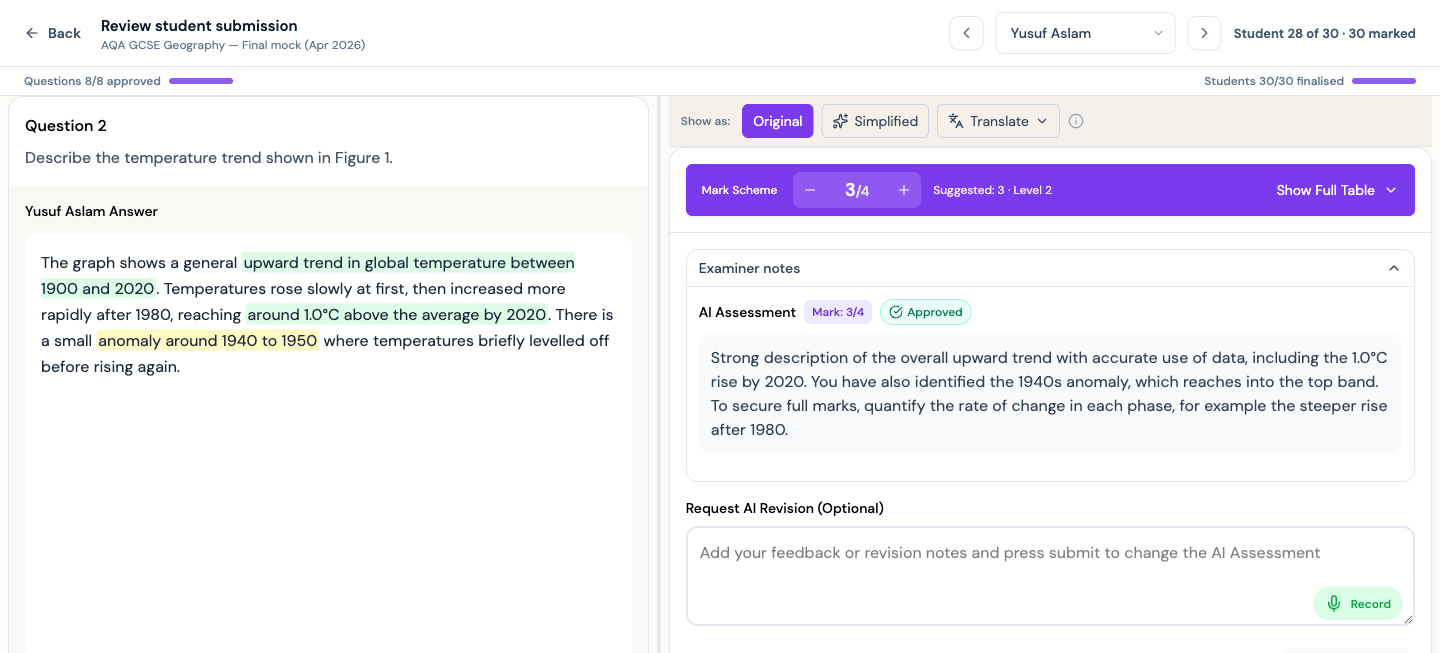
The fastest way to understand Rubrical is to watch it mark a single answer. Here's a real Year 13 response to a 6-mark "analyse" question, marked against the rubric.
Analyse the role of TNCs in shaping cultural exchange between countries.
Transnational corporations like McDonald's and Netflix spread Western culture around the world. When they open in new countries, they bring their products and ways of doing things, which changes local habits. This can lead to a loss of local culture as people start to prefer global brands. Some people call this "cultural erosion" but others argue it creates a mix of cultures called glocalisation, where global products adapt to local tastes. Overall, TNCs have a big influence on culture.
You've identified relevant processes of cultural change, which secures AO1, and glocalisation is a strong concept. To reach Level 3, explain how the mechanism works: link Netflix's localised content directly to the blending of cultures, rather than stating that it happens.
Every mark is evidenced, and nothing here is final until you approve it. See it with your own papers
The questions every teacher asks first.
Marking is a professional judgement. Here's exactly how Rubrical respects that.
"Will it mark accurately?"
It marks to your rubric and levels, not a generic scale, and shows the evidence behind every mark next to the mark scheme. You can check any decision in seconds, and correct it if you disagree.
"Am I still in control?"
Always. Rubrical drafts; you decide. Change a mark, edit a comment, or add a note and ask it to re-mark. Nothing reaches a student until you press approve, and the final judgement is recorded as yours.
"Will the feedback sound robotic?"
The draft is written in plain, specific language tied to what the student actually wrote, not generic praise. You edit it so it sounds like you, and it can be simplified or translated for the reader.
Four steps, start to returned.
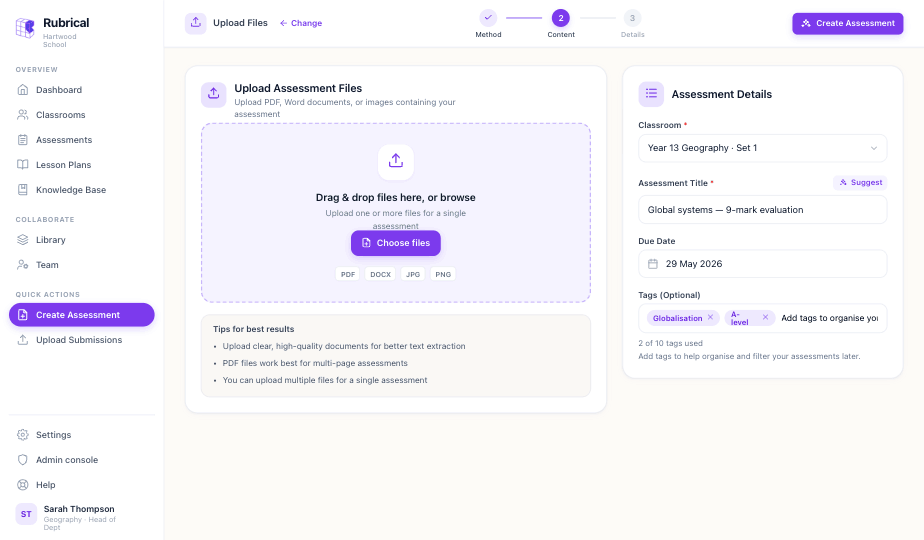
Upload a PDF, Word doc or photo of the assessment and its mark scheme. Rubrical reads it and pulls out the questions, marks and assessment objectives. More on assessment creation
Upload scans, import from Google Classroom or Microsoft, or share a hand-in link. Handwriting is read for you.
Rubrical marks every answer against your rubric and drafts feedback, with the marks ready for you to review.
Read the draft, adjust anything, then approve and return to the class. The marks flow straight into your analytics.
Assessment objectives, detected for you
Aligned to the spec you teach.
Rubrical works to the major UK exam-board specifications and their assessment objectives, so the marking matches what the examiner expects.
Teaching something bespoke? Upload your own rubric or mark scheme and Rubrical marks to it. The reasoning still maps back to your levels.
One marking standard, across every teacher.
When a department marks with Rubrical, the same rubric is applied the same way by everyone. A mark means the same thing whoever gave it, moderation gets easier, and a student always gets the same answer to "why did I get this?"
- Shared rubrics and mark schemes across the department.
- Consistent levels across sets, teachers and year groups.
- Less time spent standardising, more spent teaching.
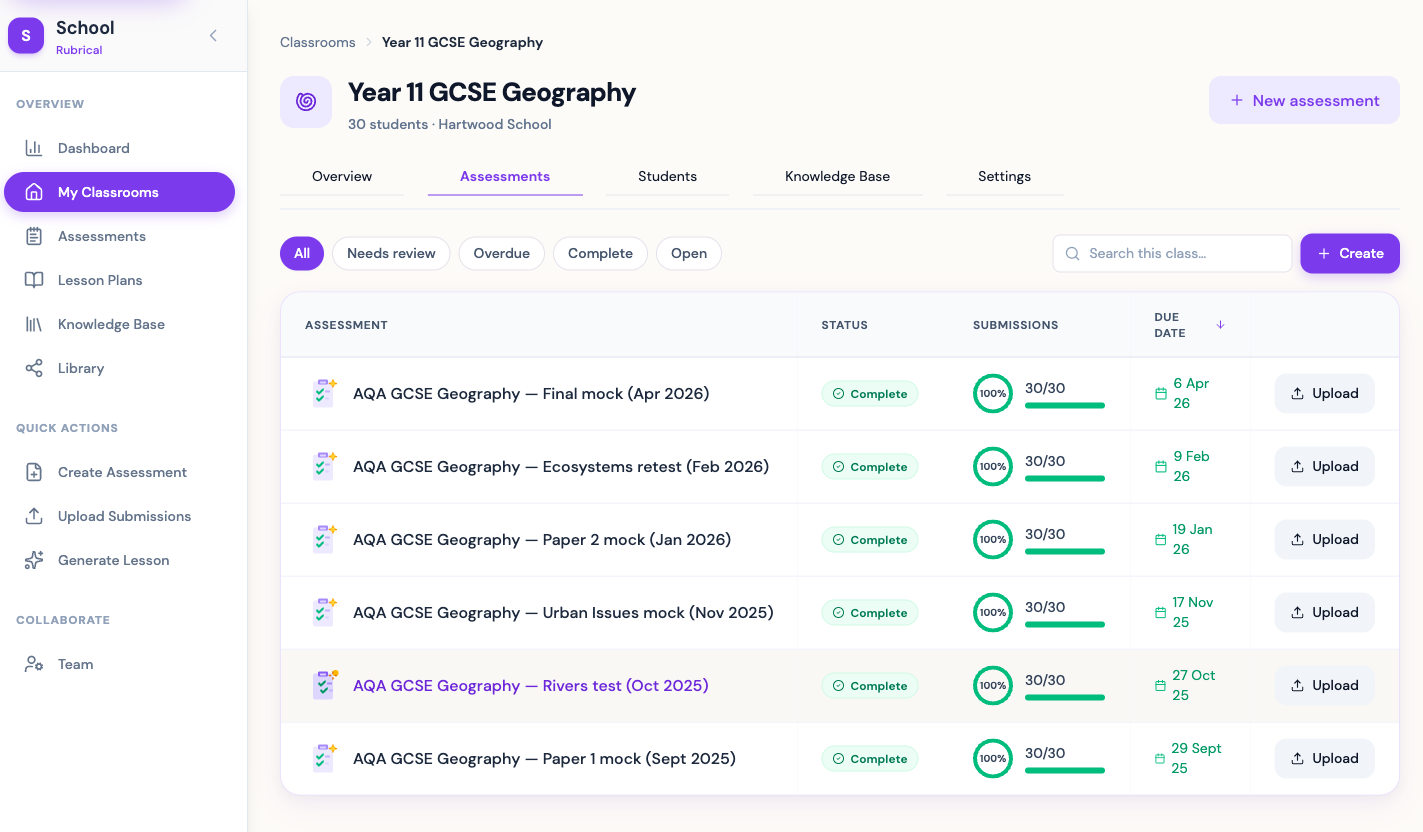
However your students hand in, Rubrical takes it.
Upload scans
Photograph or scan paper scripts. Handwriting is read for you.

Google Classroom
Pull submissions straight from the classroom you already use.

Microsoft Teams
Bring work in from Microsoft Education accounts.
Hand-in link
Share a link or QR code and let students submit their own work.
Bring a real paper and we'll mark it together.
A short call with your own assessment. See exactly how the marking and reasoning land before you decide anything.